Wolfgang Ernst Pauli
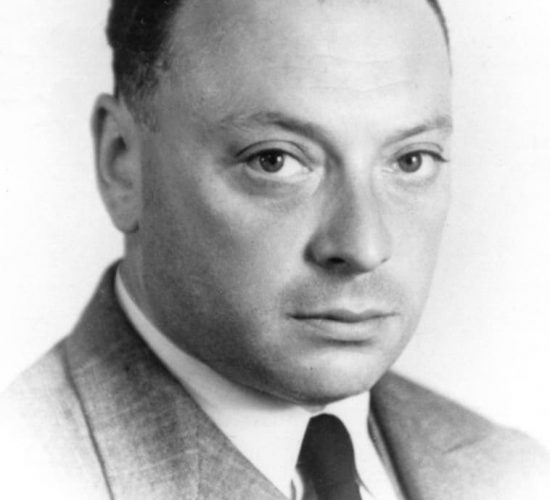
Wolfgang Pauli is the reason the neutrino exists in physics. In 1930, faced with energy that seemed to vanish in radioactive decay, he proposed an invisible, neutral particle that carried it away. It took 26 years to prove him right.
Life and Career
Pauli was born in Vienna; the physicist and philosopher Ernst Mach was his godfather. He studied in Munich under Arnold Sommerfeld and completed his doctorate in 1921. While still a student he wrote a review of the theory of relativity that Einstein himself praised. He then worked with Max Born in Göttingen and Niels Bohr in Copenhagen, taught in Hamburg, and in 1928 became professor of theoretical physics at the ETH in Zurich, where he stayed for the rest of his career apart from the war years in Princeton.
In 1925 he formulated the exclusion principle: no two electrons in an atom can occupy the same quantum state. It explains the structure of the periodic table and the stability of matter, and it earned him the 1945 Nobel Prize in Physics.
The Neutrino
In beta decay, an atomic nucleus emits an electron, but the electrons came out with a spread of energies, and some energy appeared to be missing. Some physicists were ready to give up the conservation of energy. On 4 December 1930 Pauli proposed what he called a “desperate remedy” in a letter that opened “Dear radioactive ladies and gentlemen”: a light, neutral particle, emitted together with the electron, that carried the missing energy. Enrico Fermi named it the neutrino and built a theory of beta decay around it in 1934. In 1956 Clyde Cowan and Frederick Reines detected neutrinos at a nuclear reactor and sent Pauli a telegram with the news.
Why His Work Matters Here
Pauli proposed the neutrino to keep the energy books balanced. That principle stands at the start of the neutrino’s history and at the centre of every serious energy conversion today: output can only come from energy that is actually coupled in. See the Neutrino page.