Nikola Tesla
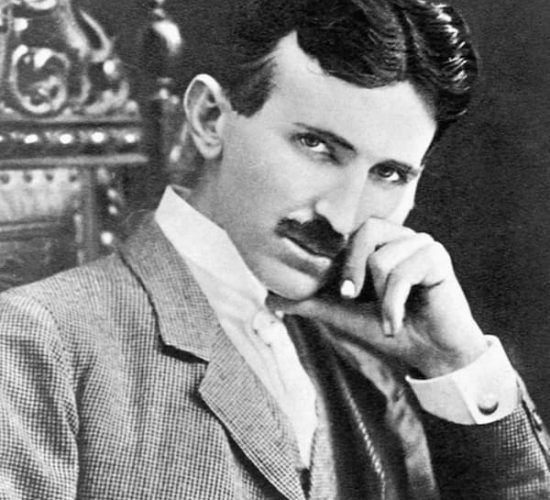
Nikola Tesla built much of the electrical world we live in. His alternating-current motor and polyphase system made it possible to generate power in one place and use it in another, and the grids that carry electricity today still run on the principles he patented in the 1880s.
Life and Career
Tesla was born in Smiljan, in today’s Croatia, studied engineering in Graz and worked for the Continental Edison Company in Paris before emigrating to the United States in 1884. After a short period with Thomas Edison, he founded his own company and in 1888 patented the alternating-current induction motor. George Westinghouse licensed his patents, and Tesla’s polyphase system lit the 1893 World’s Columbian Exposition in Chicago and powered the hydroelectric plant at Niagara Falls.
He went on to invent the Tesla coil, experimented with radio and wireless power transmission, and in 1901 began building the Wardenclyffe tower on Long Island for wireless communication and energy transfer. The project ran out of money and was never completed. Tesla died in New York in 1943. The SI unit of magnetic flux density, the tesla, is named after him.
Radiant Energy
In 1901 Tesla received US patent 685,957, “Apparatus for the Utilization of Radiant Energy”, describing a plate exposed to radiation that charges a capacitor. He was convinced that the energy constantly arriving from the Sun and from space could be tapped directly. He also observed that waterfalls were the most economical way known to draw energy from the Sun.
Why His Work Matters Here
Tesla gave the world the grid, and he also imagined energy taken from the environment where it is needed. Both ideas belong together today: in the Energy Architecture Transition, local conversion of ambient energy works alongside the grid, which stays as connection, reserve and balancing layer. See the Neutrino page.