Neutrino Wiki: Neutrino Energy, The Coming Energy Revolution
NEUTRINO AND
THE FUTURE OF ENERGY
The global knowledge base for neutrino research & energy.
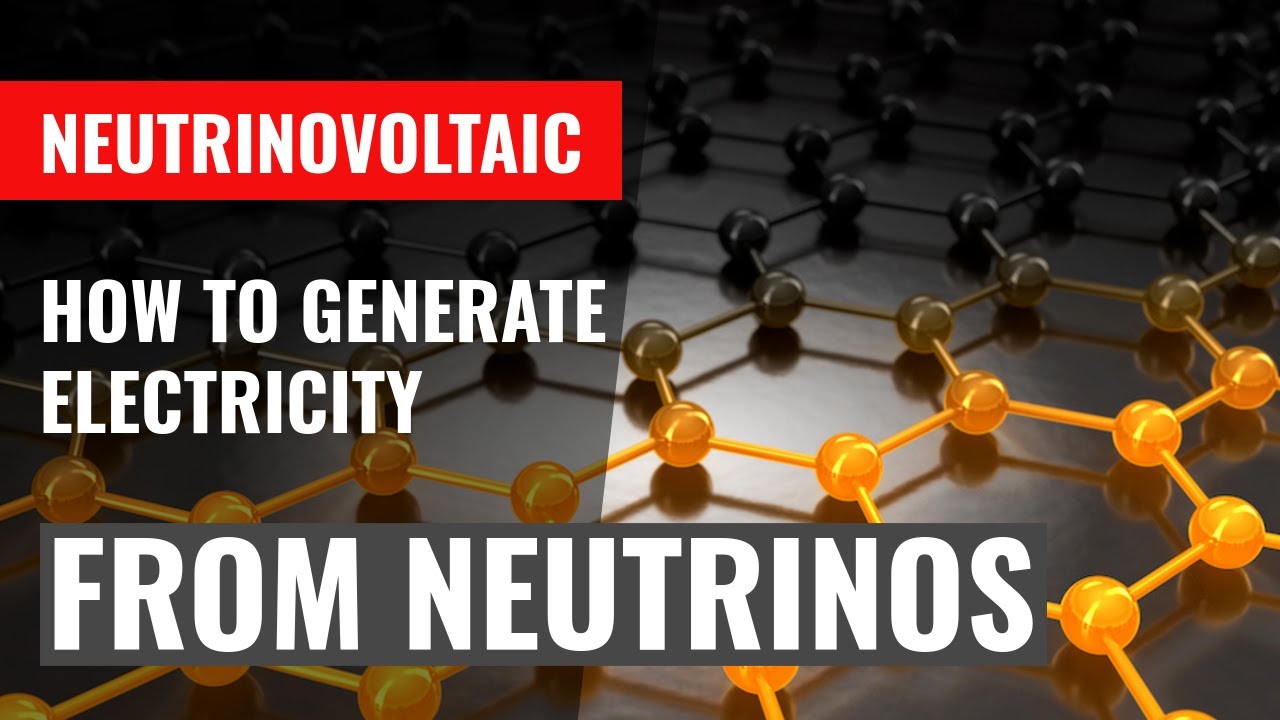
What is Neutrino Energy?
“The harness of waterfalls is the most economical method known for drawing energy from the sun,” observed the famed scientist Nikola Tesla. Yet, recent discoveries of unusual properties of a tiny subatomic particle may make Tesla’s opinion less complete. Modern researchers are now convinced the neutrino is part of an abundant, clean, renewable energy system rather than a speculative source only.
The Neutrino: A Mysterious Particle
The idea that matter is made up of small building blocks is very old. Ancient Greek thinkers like Leucippus suggested such a theory and even coined the term “atom” as the name of the tiny unit. By the 1800s, modern scientists expanded on this idea and began to unlock the secrets of the atom. They discovered that atoms were made up of smaller “subatomic” particles like electrons. Yet, these early physicists did not realize that even smaller particles existed until radioactivity was discovered near the beginning of the 20th century. Ernest Rutherford, an early British researcher in radioactive elements, discovered that electrons were emitted when a radioactive substance decays. Further study revealed that there was an unexplained loss of energy during this decay process.
The law of the conservation of energy tipped off scientists that there must be a mysterious particle which contained the missing energy. Physicist Wolfgang Pauli theorized that an unidentified sub-atomic particle is emitted along with an electron during the decay process, and called it a “neutron.” In 1931, Italian physicist Enrico Fermi renamed the particle “neutrino” to distinguish it from the just discovered larger neutral particle, the neutron.
It would take scientists another 25 years to verify the existence of neutrinos. In 1956, Los Alamos scientists Clyde Cowan, Frederick Reines, and three other researchers detected neutrinos in a laboratory experiment that used large tanks of water located near a nuclear reactor. The physicists were able to detect neutrinos emitted from the reactor by recording their interactions with protons in the water. This was the confirmation of Pauli’s theory and proof that neutrinos did exist. The team of scientists eventually won the 1995 Nobel Prize for their discovery.
The Valuable Properties of the Neutrino
Researchers have found that neutrinos possess some valuable properties. First, the tiny particles have mass. This fact eluded scientists for many decades. “Scientists have assumed for decades that, because they interact so little with matter, neutrinos must lack any measurable mass,” writes Jennifer Chu of the Massachusetts Institute of Technology. This belief changed when scientists discovered that neutrinos oscillate. Two physicists, working independently of each other, discovered that neutrinos can change between three different “flavors.” This is called “oscillation.” Takaaki Kajita and Arthur B. McDonald shared the 2015 Nobel Prize in Physics for their simultaneous discovery of this feature. For oscillation to occur, a neutrino must possess mass.
While the mass amount is so small that it makes it difficult to measure, this characteristic of a neutrino is still immensely important as an energy source. This is due to energy’s special relationship with mass. Einstein’s Special Theory of Relativity described this relationship in the famous equation E=mc², which revealed that mass can be converted into energy. With trillions of neutrinos reaching earth each day from the Sun and from cosmic sources, vast amounts of energy can be harnessed if science can unlock the process to convert neutrino-mass interactions into electric energy.
Another important property of the neutrino is its “ghost-like” nature. The particle is so small that it does not interact with other materials in most instances. This means neutrinos pass through solid matter as if it did not exist. Scientists estimate that billions of neutrinos pass through the Earth each day. This feature means that it would be possible to produce energy anywhere on the face of the earth at any time from neutrinos – even when a location is facing away from the sun or during darkness.
The Vast Possibilities for the Future
With an increased understanding of the neutrino, many possibilities exist for practical applications. First, neutrinos may improve monitoring of nuclear weapons. Since every radioactive material produces neutrinos, the production of nuclear weapons by rogue nations could be monitored with detectors tuned to identify neutrinos from great distances. “[Such a] device would consist of a tank containing thousands of tons of gadolinium-doped water and could theoretically detect antineutrinos from an illicit reactor up to 1,000 kilometers away,” writes Jesse Emspak for Scientific American. Scientific developments such as gadolinium-doped water Cherenkov detectors are under study for reactor monitoring and neutrino detection with enhanced sensitivity. Such detectors benefit from large interaction volumes and improved detection efficiency via neutron capture on gadolinium.
Second, neutrinos may be useful in researching the inner depths of the Earth. This is due to the tiny particles’ reactions when passing through materials. A neutrino spins as it travels, and this movement is influenced by the material through which it passes. Scientists believe they could develop neutrino scanners which could “see” into the Earth’s core and identify specific minerals or oil deposits.
Third, communication systems could be improved with the harnessing of neutrinos. Electromagnetic radiation has been the traditional medium for transmitting communication, but it has its limitations. For example, seawater interferes with efficient communication with submerged vessels. Yet neutrinos easily pass through seawater which would make them an ideal carrier of communication. While physicists have long theorized that neutrino-based communication was possible, experimental work such as a 2012 Fermilab beam experiment transmitted the word “neutrino” over about 1 km using neutrino beam.
Finally, the greatest potential benefit of neutrinos is the production of energy.
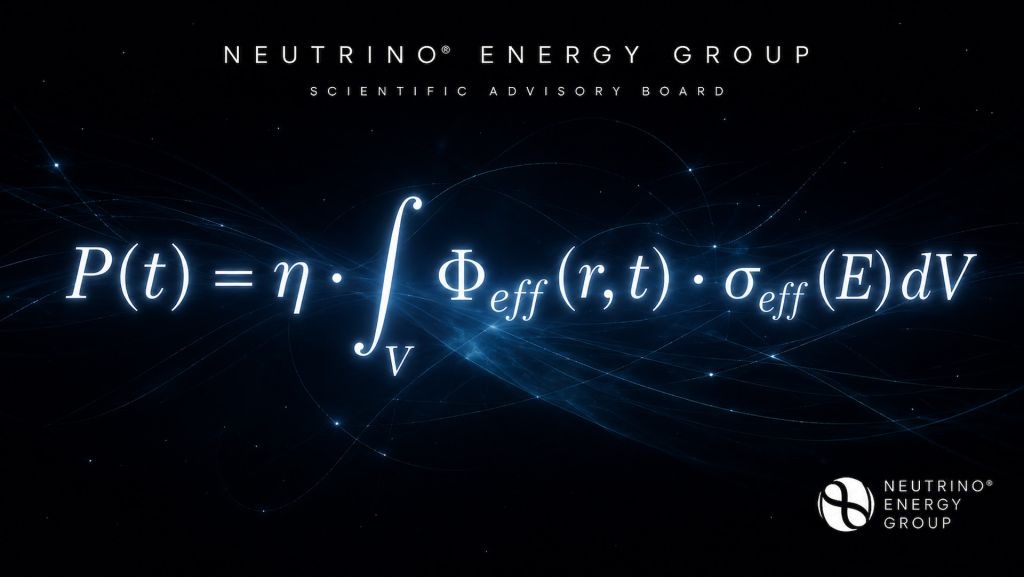
Though scientists have long dismissed the idea that neutrinos could serve as an energy source, the 2015 discovery of the neutrino mass convinced many in the field that neutrino energy is possible. The Neutrino® Energy Group now works with verified physical mechanisms and a mathematical framework. The newly published Holger Thorsten Schubart–NEG Master Equation for Neutrinovoltaics (P(t) = η · ∫V Φ_eff(r,t) · σ_eff(E) dV) defines how invisible fluxes from neutrino–electron scattering, coherent elastic neutrino–nucleus scattering (CEνNS), cosmic muons, RF and microwave fields, thermal fluctuations and mechanical microvibrations combine additively to generate continuous current.
The Neutrino Power Cube is one of the first practical applications of that equation. It is a device with net capacity of 5-6 kW in a unit weighing approximately 50 kilograms, based on multilayer graphene and doped silicon nanostructures engineered to vibrate under neutrinos and other non-visible radiation. Scalability is key. Two hundred thousand such Power Cubes would provide about 1000 MW of continuous power, which is roughly the output of a medium nuclear power plant. This gives a mathematical scale to what was once speculative.
Beyond the Power Cube the Neutrino® Energy Group is also developing the Neutrino Life Cube aimed at critical infrastructure and remote regions where grid reliability is low. The Life Cube integrates the same principles but is optimized for durability, environmental extremes, and stable baseline power where fallback options are limited.
Additionally the Group has introduced blockchain-based instruments Pi-12 and NET8 to support licensing, integration and cooperative development of neutrinovoltaic technology. These instruments help ensure transparency, scalability and regulatory compliance of deployments.
Other projects include Project 12742 which explores applying the Master Equation framework to global communication systems and autonomous micro-networks. Also Pi Mobility (Pi Car, Pi Fly, Pi Nautic) is under development to integrate neutrinovoltaic energy into vehicles, aircraft and maritime vessels, reducing dependency on external charging or fuel infrastructure.
These advances rest upon validated science. The mass of the neutrino was confirmed in 2015. CEνNS was first observed in 2017 providing evidence that neutrinos can impart momentum to atomic nuclei. Astrophysical observations in 2025 using James Webb Space Telescope and ALMA reinforced that neutrinos play a major role in energy transport in supernovae. The Holger Thorsten Schubart–NEG Master Equation builds upon these results making the mechanisms calculable, measurable and reproducible.
In summary the idea that neutrino energy could power phones, homes or entire networks is no longer only theoretical. With the deployment of Neutrino Power Cube and Life Cube, the mathematical clarity of the Master Equation and instruments such as Pi-12 and NET8, the Neutrino® Energy Group moves from hypothesis to scalable technology.
Neutrino NEWS

Neutrino Wiki jetzt auch auf Deutsch!

Информация о нейтрино теперь и по-русски

Más información sobre neutrinos también está disponible en español!
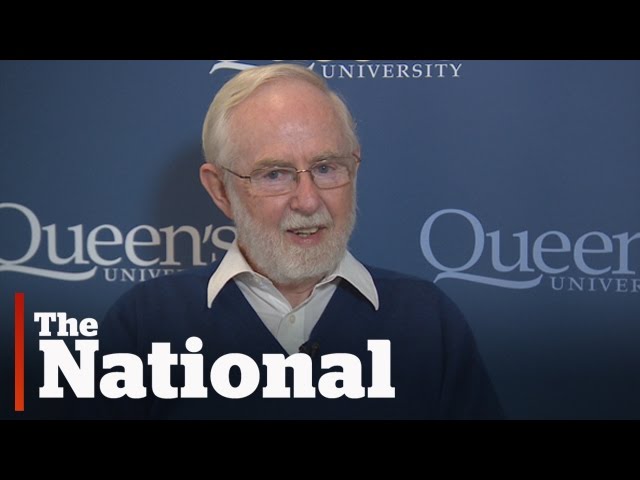
Arthur B. McDonald wins 2015 Nobel Prize in Physics
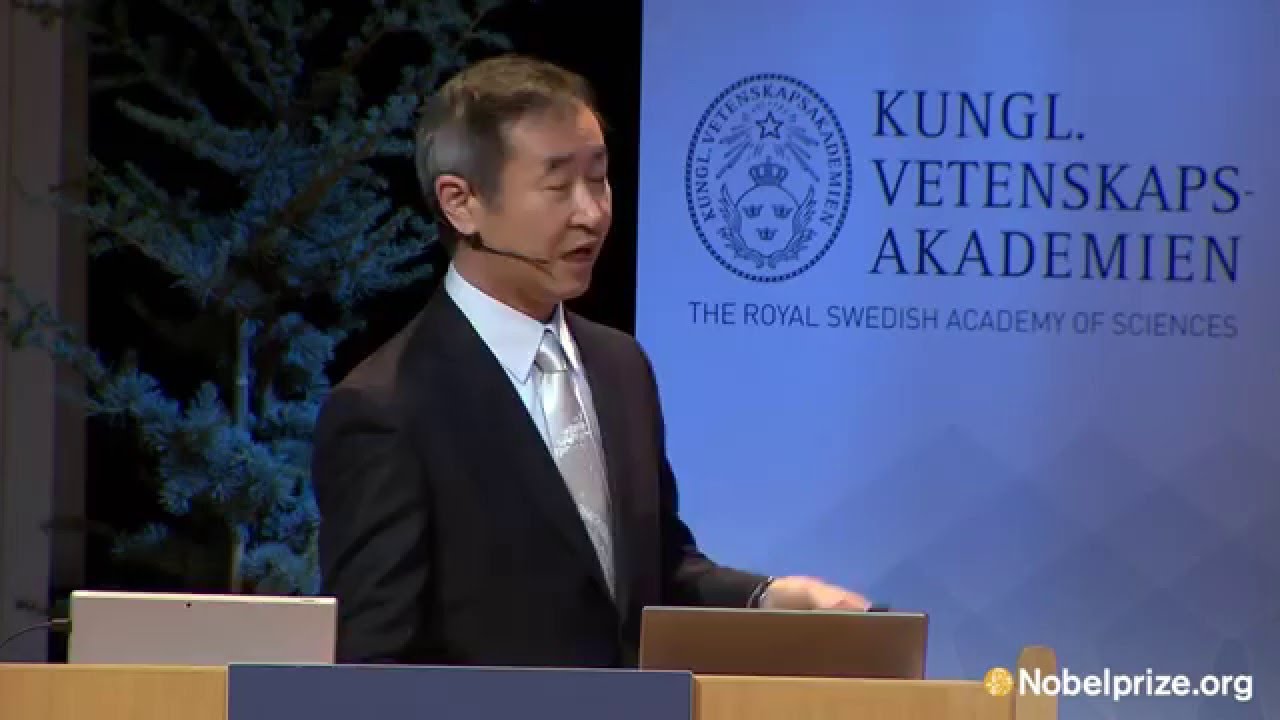
Takaaki Kajita: Discovery of atmospheric neutrino oscillations
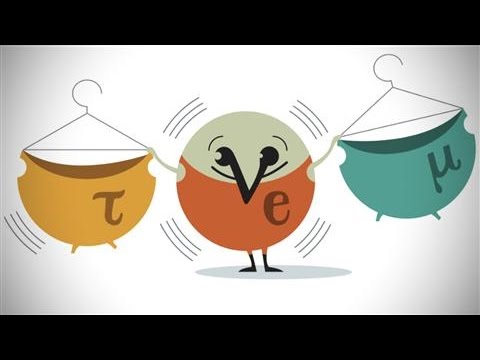
Neutrino Discovery Leads to Nobel Prize in Physics
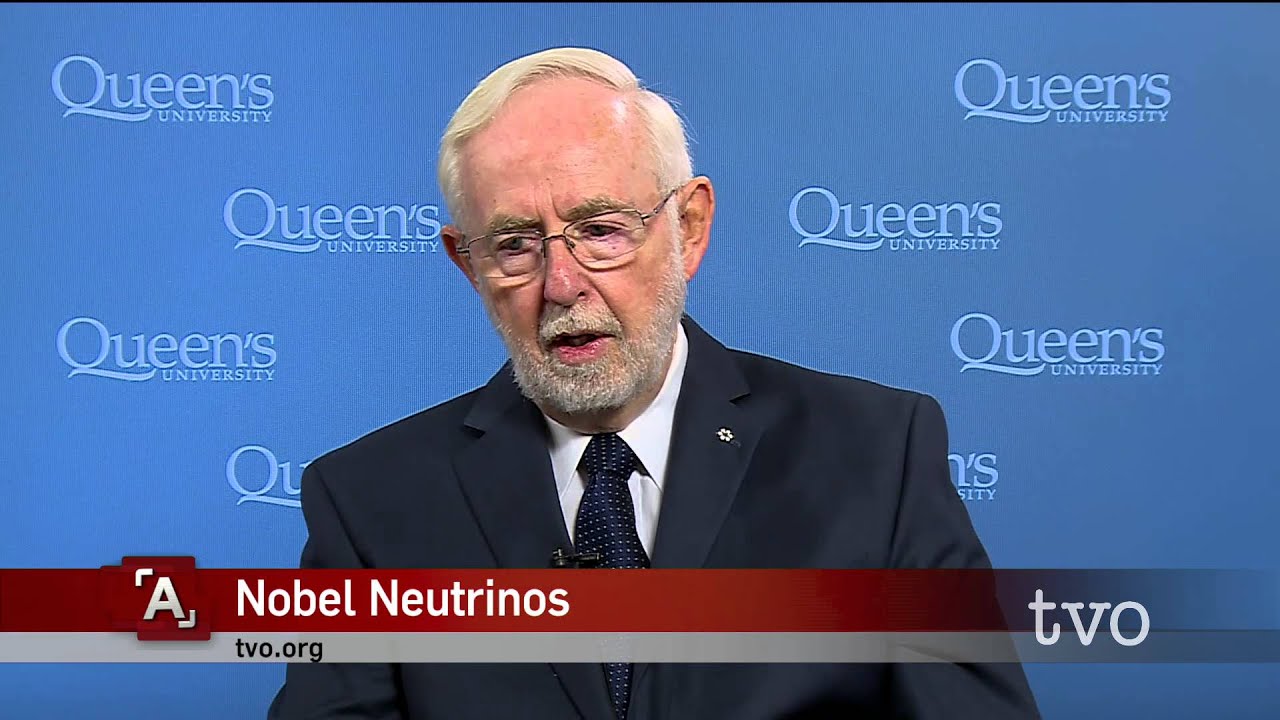
Work on neutrino win McDonald the Nobel Prize in physics

„We make energy affordable and sustainable. We are realistic, but demand the impossible. We believe that with enough ingenuity the impossible becomes the inevitable. – Holger Thorsten Schubart, CEO of the Neutrino® Energy Group“
NEUTRINO NEWS
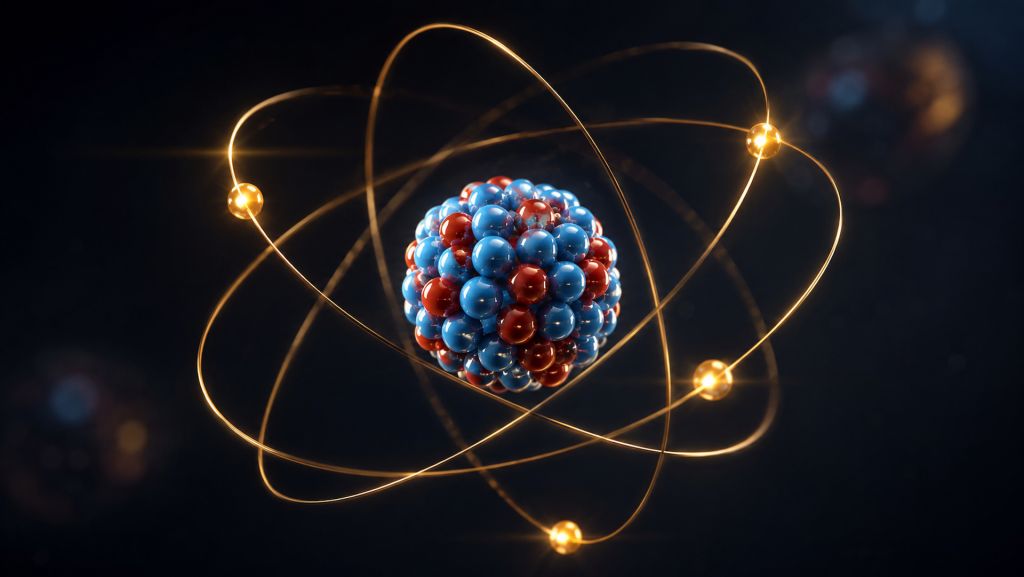
02 Aug.: A Different Kind of Energy Independence, Built at the Scale of Particles
Energy security is often discussed through geopolitics, markets, and infrastructure. Less often does the conversation shift to the scale where…
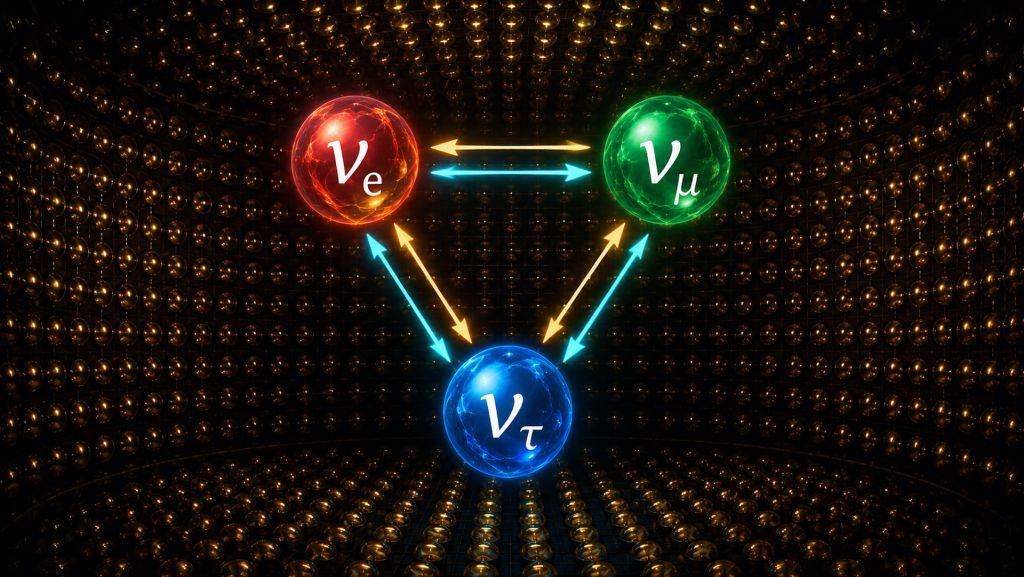
30 Juli: How Neutrino Oscillation Teaches Us Energy Is Never Lost
One of physics‘ longest-running mysteries began with a simple mismatch between prediction and observation. Solving it transformed our understanding of…

30 Juli: When Artificial Intelligence Begins Asking the Questions
Artificial intelligence is already accelerating scientific research by identifying patterns, testing hypotheses, and analyzing data at a scale no individual…
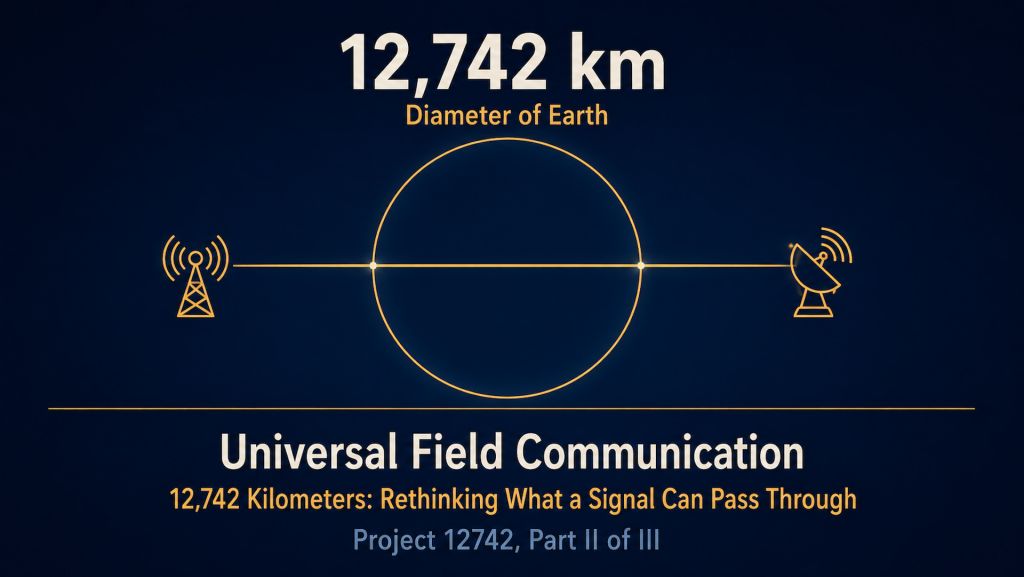
30 Juli: Universal Field Communication: Phase II of Project 12742
For decades, every communication system has relied on the electromagnetic spectrum, each facing the same physical barriers imposed by water,…
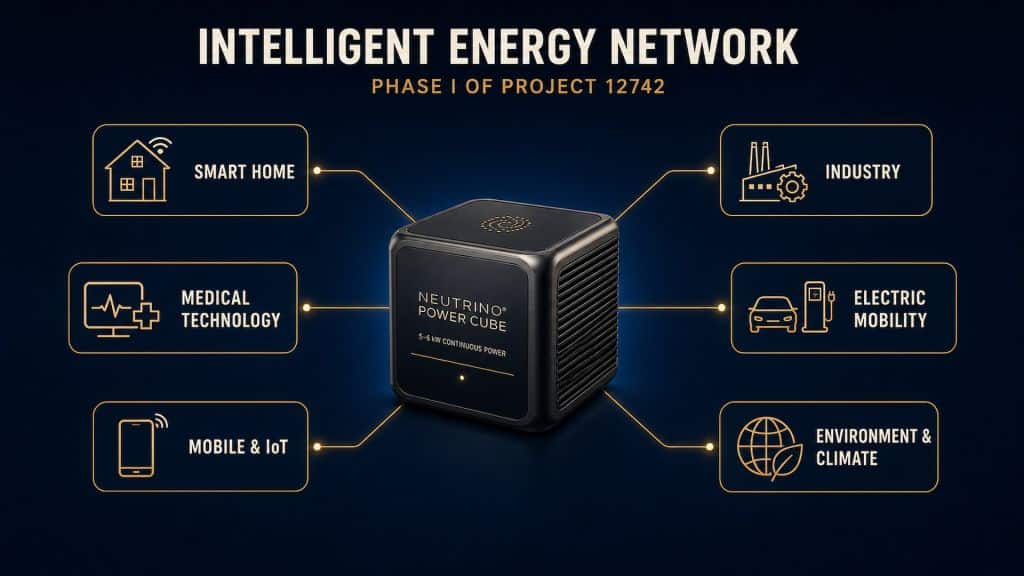
30 Juli: Intelligent Energy Network: Phase I of Project 12742
Connected technologies have become smaller, faster, and more intelligent, yet one limitation continues to shape nearly every system: reliable power….
28 Juli: Review of Neutrino Astronomy and Neutrino Physics
From oscillation parameters and the PMNS matrix to supernovae, active galactic nuclei, relic neutrinos, and multi-messenger observatories, neutrino research now…
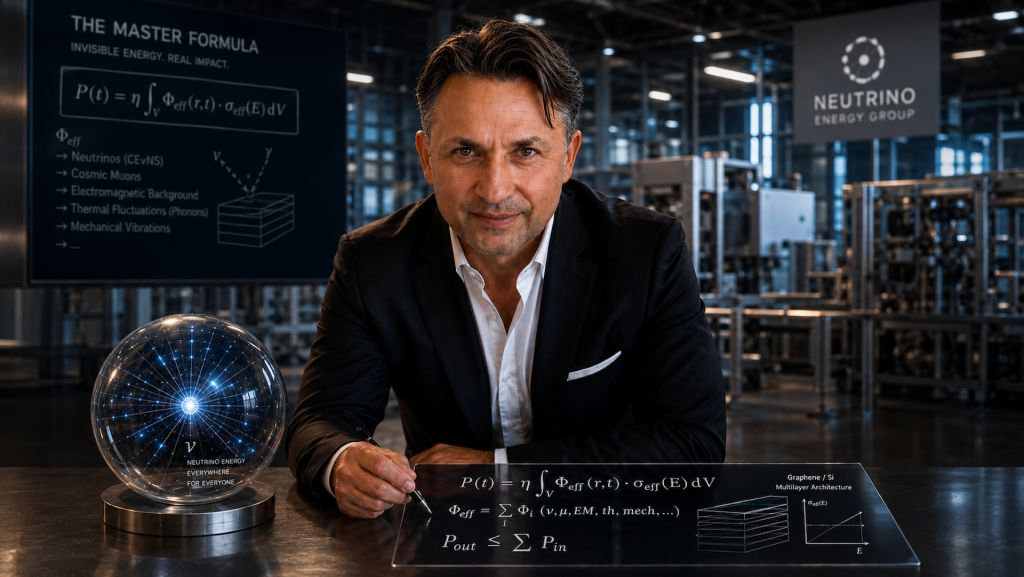
27 Juli: Could Ghost Particles Become a New Energy Source?
From underground neutrino observatories to atom-thin graphene films, one of physics‘ most elusive particles is inspiring new discussions about energy…
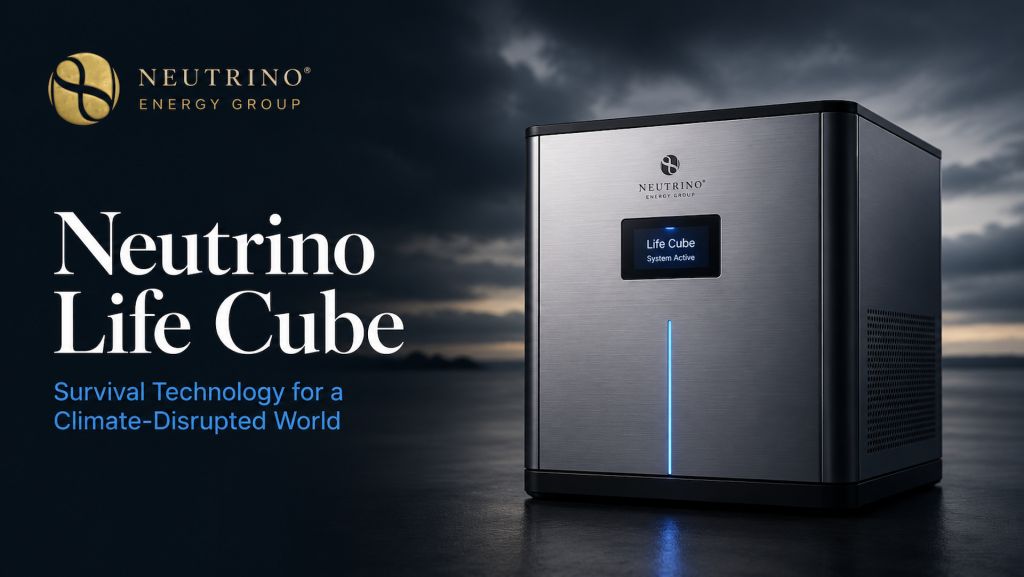
27 Juli: Neutrino Life Cube: Continuous Energy. Treated Water. Human Progress.
When infrastructure fails, the first shortages are often electricity and safe water. Rethinking resilience means looking beyond fuel deliveries and…
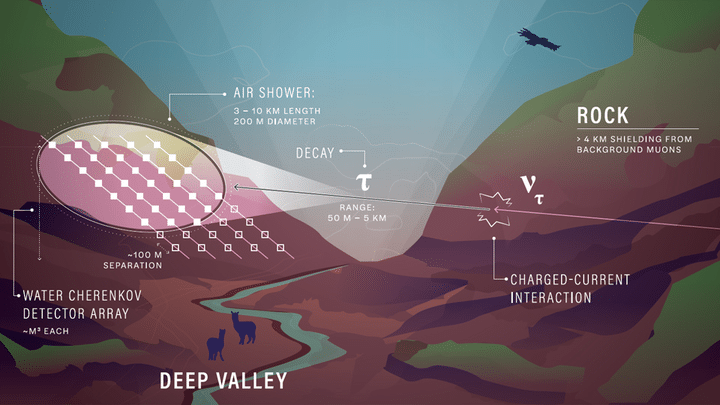
25 Juli: High in the Mountains, TAMBO Will Hunt for the Highest-Energy Neutrinos
Some of the universe’s most energetic messengers may be found not beneath Antarctic ice, but between towering mountain walls. The…
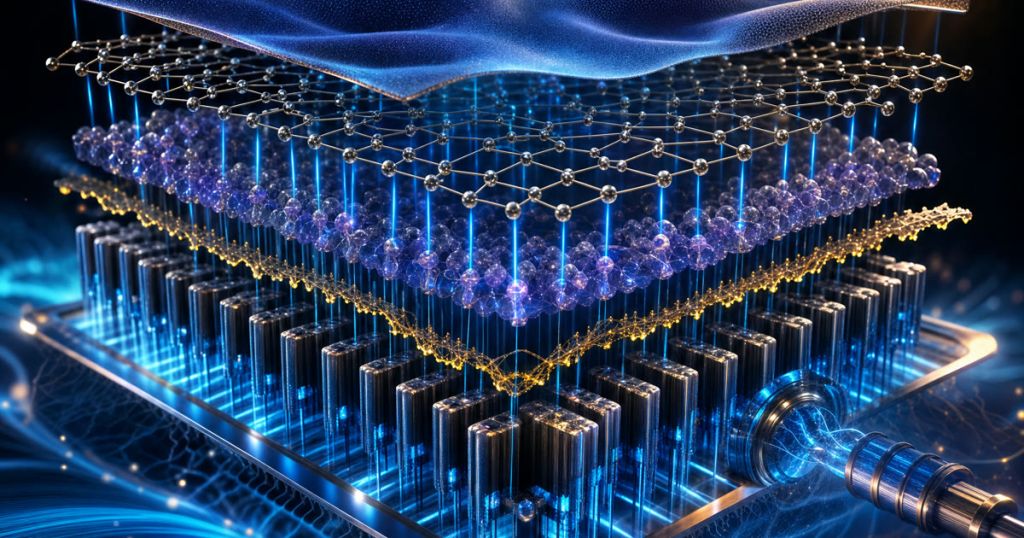
25 Juli: Energy Harvesting: Turning Ambient Physics into Electrical Power
Every environment contains persistent energy flows, from thermal motion and electromagnetic fields to other naturally occurring interactions. The challenge is…