Takaaki Kajita
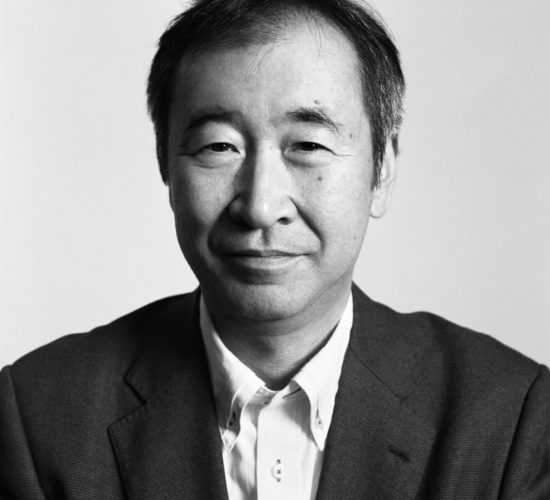
Takaaki Kajita found the first convincing evidence that neutrinos change from one type to another as they travel. Because such oscillation requires mass, his result overturned the long-held assumption that neutrinos are massless. He shared the 2015 Nobel Prize in Physics with Arthur B. McDonald.
Life and Career
Kajita studied at Saitama University and received his doctorate from the University of Tokyo in 1986 under Masatoshi Koshiba, himself awarded the 2002 Nobel Prize for pioneering neutrino astronomy. He worked on the Kamiokande experiment and then on its much larger successor, Super-Kamiokande: a tank of 50,000 tonnes of ultra-pure water, one kilometre underground in the Kamioka mine in Gifu Prefecture, watched by more than 11,000 light sensors.
He later served for many years as director of the Institute for Cosmic Ray Research at the University of Tokyo and led the KAGRA gravitational-wave detector, built in the same mountain.
The Discovery
Neutrinos are produced when cosmic rays strike the upper atmosphere. Super-Kamiokande could tell the direction from which each neutrino arrived. Kajita’s team noticed that muon neutrinos coming down from the sky above arrived in the expected numbers, while those coming up through the Earth, after a journey of up to 13,000 kilometres, were clearly fewer. They had changed into another type along the way. The result was announced in 1998 and became the first solid proof of neutrino oscillation.
Why His Work Matters Here
Oscillation showed that neutrinos have mass and that their interactions with matter can be measured precisely. That established physics is the starting point for neutrinovoltaic research. See the Neutrino page.