Arthur B. McDonald
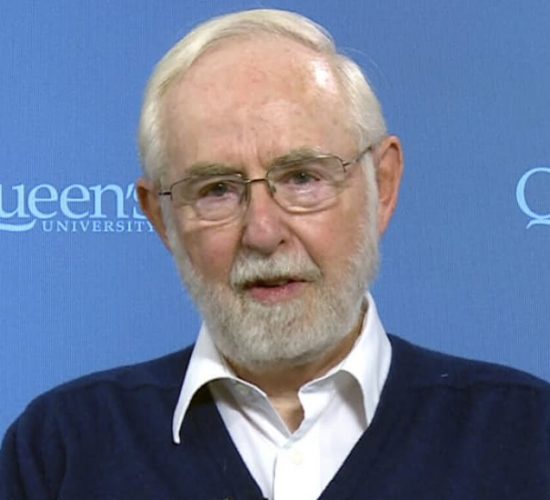
Arthur B. McDonald led the experiment that solved one of the longest-running puzzles in physics: why fewer neutrinos seemed to arrive from the Sun than theory predicted. The answer, that neutrinos change type on the way, showed that they have mass and earned him the 2015 Nobel Prize in Physics, shared with Takaaki Kajita.
Life and Career
McDonald grew up in Nova Scotia, studied physics at Dalhousie University and received his PhD from the California Institute of Technology in 1969. He worked at the Chalk River Laboratories in Ontario and as a professor at Princeton University before moving to Queen’s University in Kingston in 1989.
There he became director of the Sudbury Neutrino Observatory, built two kilometres underground in a nickel mine near Sudbury, Ontario. Its heart was 1,000 tonnes of heavy water, an idea proposed by Herb Chen in 1984. Heavy water let the detector count electron neutrinos on their own and, separately, neutrinos of all three types together.
The Discovery
Since the late 1960s, experiments had measured only about a third to a half of the solar neutrinos the models predicted. In 2001 and 2002 SNO showed why. The number of electron neutrinos was low, but the total number of all types matched the predictions of solar models. The missing neutrinos had not vanished. They had changed into muon and tau neutrinos on their way from the Sun, which is only possible if neutrinos have mass.
Why His Work Matters Here
SNO proved that neutrinos carry mass and interact with matter in measurable ways. Neutrinovoltaic research builds on that physics, asking how the energy that such interactions transfer, together with other ambient inputs, can be converted in a material. See the Neutrino page.